Urinalysis
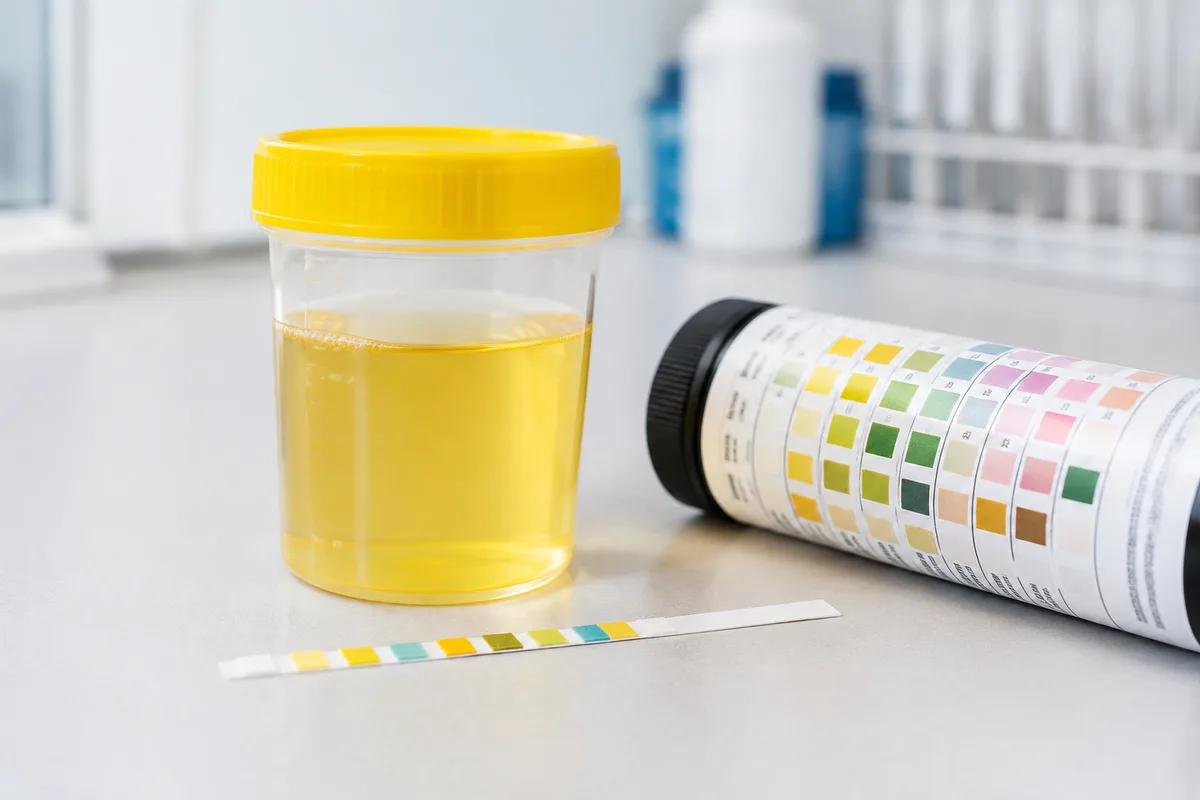
Urinalysis
Urinalysis is a fast screening test for infection, kidney health and diabetes. It is one of the most common tools in primary care because a small sample can reveal a wide range of useful information about how the body is working, often within minutes.
What urinalysis is
Urinalysis is the examination of a urine sample to check for signs of infection, kidney irritation, dehydration, and changes related to blood sugar control. The sample is typically checked with a test strip that reacts to different substances in the urine, and it can also be looked at under a microscope or sent out for more detailed analysis when needed.
Before test strips and standardized lab methods became widespread, clinicians relied mostly on visible appearance and patient-reported symptoms to judge urinary or kidney concerns. Modern urinalysis replaced much of that guesswork with objective, repeatable readings — for protein, glucose, blood, white blood cells, and other markers — that can be reviewed the same day.
How we use it at Quentin Medical Pc
At Quentin Medical Pc, urinalysis is used as a quick screening step during routine and problem-focused visits, helping to flag infection, kidney concerns, or signs related to diabetes early. It often works alongside other on-site checks: a blood pressure reading from our automated monitoring, or a point-of-care HbA1c test when diabetes management is part of the visit, can round out the picture that a urine sample provides.
When a sample needs closer analysis, it can be handled together with our in-office blood draw process, so both specimens are collected in one visit and sent out as needed rather than requiring a separate trip. Results are added to your secure electronic health record, and where applicable, made available through the patient portal so you can review them along with any notes from the visit.
What it means for you
A urine sample is simple to provide and does not involve needles or discomfort, which makes it a low-burden way to screen for several conditions at once. Because results are often available quickly, it can help guide same-visit decisions about next steps rather than requiring you to wait or return for a follow-up appointment.
Having results recorded electronically also means they are easy to reference at future visits, so patterns over time — such as recurring signs of infection or gradual changes related to kidney function or blood sugar — can be tracked and discussed clearly rather than pieced together from memory.
What to expect during your visit
Before the test, you may be asked simple questions about symptoms, medications, or recent fluid intake, since some of these can affect results. You will typically be given a clean collection cup and asked to provide a small sample in a private restroom; no special preparation is usually required unless you are told otherwise.
The sample itself takes only a moment to collect. Initial screening with a test strip can be reviewed within minutes, while any portion sent out for further analysis may take longer, with results shared through the patient portal or by phone. The process is brief and non-invasive, and most patients find it adds only a few minutes to a regular visit.
Frequently asked questions
Is urinalysis safe and comfortable?
Yes. Providing a urine sample is non-invasive and does not involve needles or any procedure on the body. Most patients find it quick and easy, with no discomfort involved.
How long does the test take?
Collecting the sample takes only a few minutes. Initial screening results from a test strip are often available shortly afterward, though results sent to an outside lab for more detailed analysis may take a bit longer.
How often is urinalysis needed?
How often it is used depends on your health needs. It may be part of a routine physical, checked during a sick visit if infection is suspected, or repeated periodically as part of managing an ongoing condition like diabetes or hypertension.
Who is urinalysis appropriate for?
Urinalysis is suitable for most patients, from routine physicals to symptom-driven visits. It is commonly used across age groups as a general screening tool and does not require special eligibility.
If you have questions about urinalysis or would like it included as part of an upcoming visit, reach out to Quentin Medical Pc — we are happy to talk through what it involves.
This content is for general information only and isn't medical advice. Talk with your doctor about your own situation. If you have a medical emergency, call 911.