Spirometry
Spirometry
Spirometry is a simple breathing test that measures lung function for asthma and COPD care. At Quentin Medical Pc in Brooklyn, NY, it gives our team an objective look at how well air moves in and out of your lungs, which helps guide decisions for a range of respiratory concerns as part of ongoing primary care.
What spirometry is
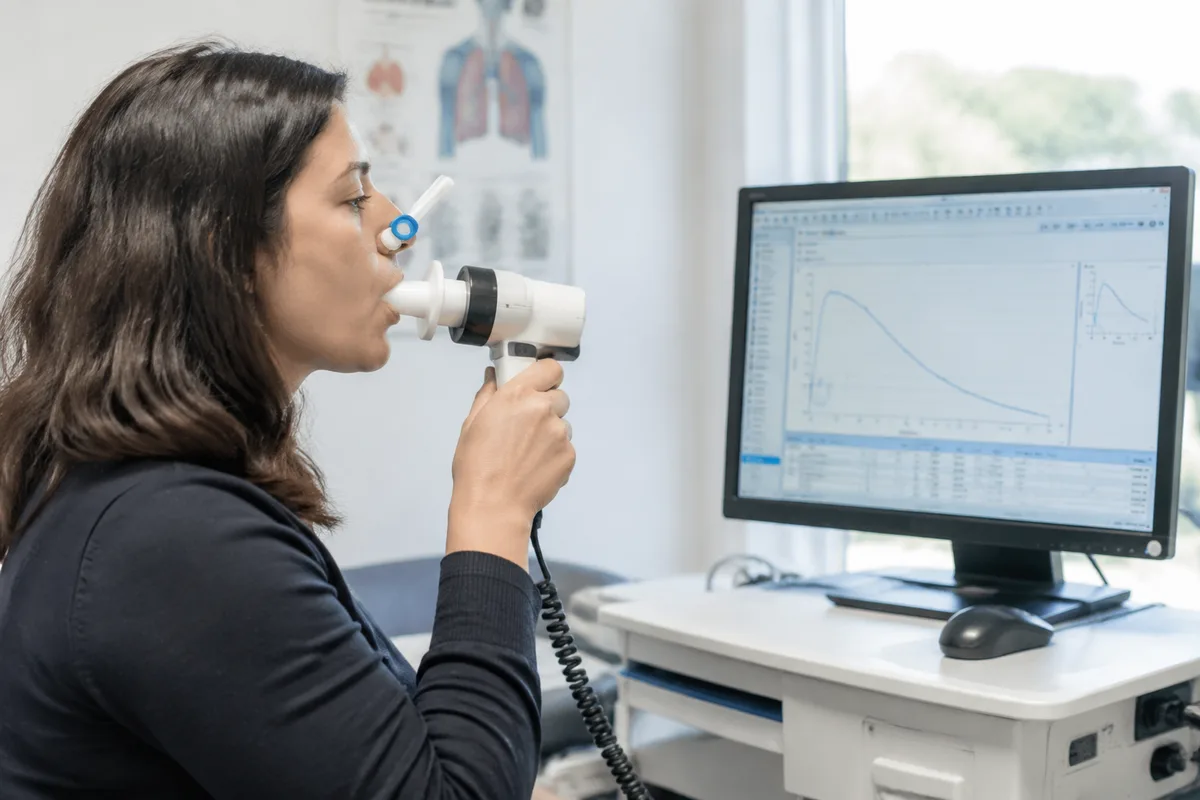
Spirometry uses a small device called a spirometer to measure how much air you can breathe in and out, and how quickly you can exhale it. You breathe through a mouthpiece connected to the device, following simple instructions, while it records airflow and volume over a few seconds.
Before tests like this were widely available in office settings, clinicians had to rely mainly on listening to the lungs with a stethoscope and asking about symptoms such as shortness of breath or wheezing. Those methods are still valuable, but they do not provide the same measurable, repeatable numbers. Spirometry adds a data-based layer to that picture, helping to identify patterns consistent with narrowed or obstructed airways, or with reduced lung capacity.
The test itself is quick and does not involve needles, radiation, or sedation. It simply asks your lungs to do what they already do — breathe — in a controlled, measured way.
How we use it at Quentin Medical Pc
At our Brooklyn office, spirometry is used to support the ongoing management of asthma and COPD, and to help evaluate breathing symptoms as part of a broader visit. Because our practice also offers pulse oximetry, spirometry results can be considered alongside blood oxygen readings for a fuller picture of respiratory status during the same appointment.
Spirometry findings are recorded in our Electronic Health Records, so they stay linked to your history, medications, and past results, and are available to review at future visits. If you use our Patient Portal, your results can also be part of the visit summary you have access to online.
Spirometry is typically used as part of chronic disease management for conditions like asthma and COPD, rather than as a stand-alone service, so it is usually paired with a conversation about symptoms, triggers, and current medications during your visit.
What it means for you
For patients, an in-office breathing test can mean not having to schedule a separate appointment elsewhere just to get a basic measure of lung function. It is non-invasive and generally well tolerated, requiring effort and cooperation rather than any exposure to needles or contrast material.
Clear, numeric results can also make conversations about your breathing easier to follow. Instead of describing symptoms in general terms, you and your clinician can refer to specific measurements, which may make it easier to track whether a treatment plan is working over time.
Because the test is quick, it can usually be worked into a regular visit without significantly extending your time at the office.
What to expect during your visit
Before the test, you may be asked about recent breathing symptoms, medications, and whether you have used any inhalers recently, since this can affect results. You will be shown how to seal your lips around the mouthpiece and given instructions on how to breathe.
During the test, you will typically take a deep breath in and then exhale as forcefully and completely as you can into the device, sometimes repeating this a few times to get consistent readings. It can feel like a bit of effort, similar to blowing out hard, but it is not painful.
Afterward, results are available quickly and can be reviewed with you at the same visit, along with any other findings from that day, such as pulse oximetry readings if those were also taken. The whole process usually adds only a few minutes to your appointment.
Frequently asked questions
Is spirometry safe?
Yes. Spirometry does not involve needles, radiation, or medication, and it simply measures air you breathe out. Some people feel briefly light-headed from the forceful breathing, but this passes quickly, and the test itself carries no exposure risk.
Does the test hurt or feel uncomfortable?
It is not painful, though it does require effort. You will be asked to breathe in deeply and blow out as hard and fast as you can, which can feel tiring for a moment, especially if repeated a few times to get a consistent reading.
How long does spirometry take?
The breathing maneuvers themselves usually take only a few minutes, though the overall test may include a couple of repeated attempts to make sure the readings are consistent. It is generally done as part of a regular office visit rather than as a separate appointment.
Who is spirometry appropriate for?
Spirometry is commonly used for patients with asthma, COPD, or other breathing symptoms that need to be measured objectively. Whether it is appropriate for you depends on your individual history and symptoms, which is something to discuss with your clinician.
If you have questions about spirometry or want to talk about your breathing health, reach out to Quentin Medical Pc to schedule a visit.
This content is for general information only and isn't medical advice. Talk with your doctor about your own situation. If you have a medical emergency, call 911.