Pulse Oximetry
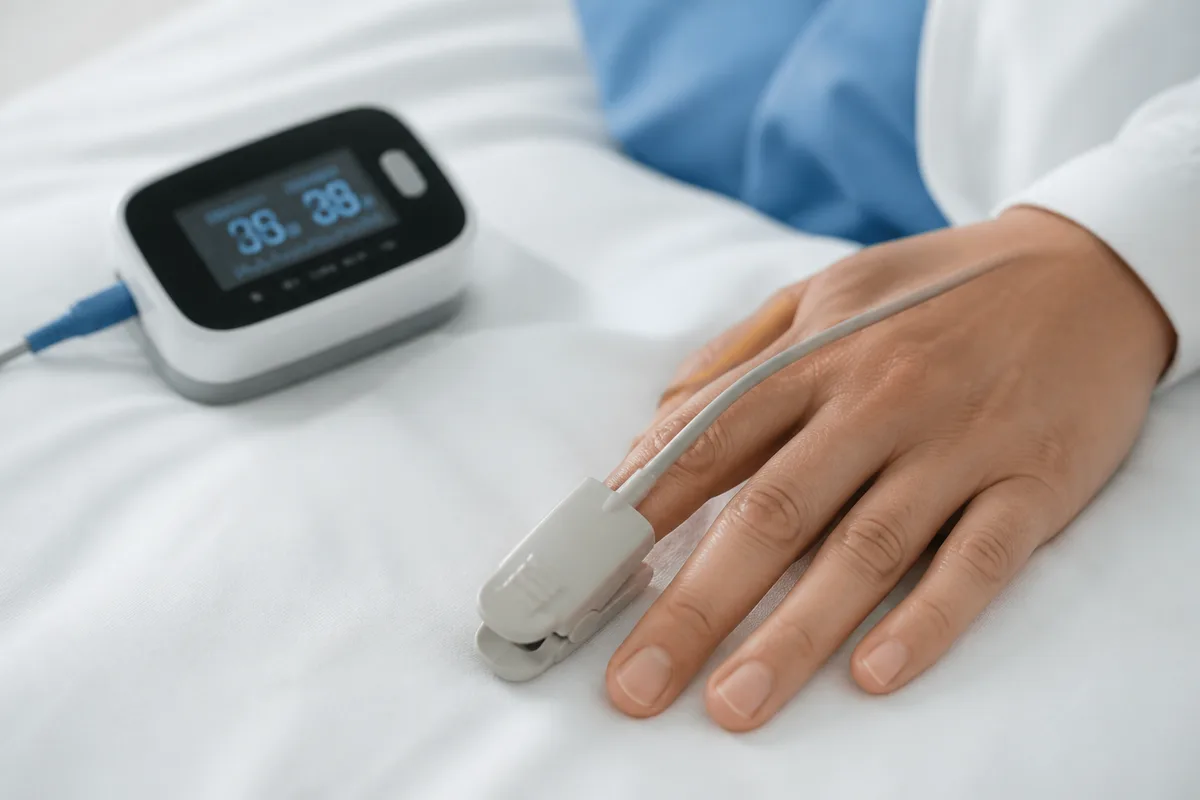
Pulse Oximetry
Pulse oximetry is a simple, painless way to check how much oxygen your blood is carrying, using a small sensor placed on a fingertip. It gives a reading in seconds and is one of the quickest checks we can perform during a visit, whether you are here for a routine wellness visit or because you are feeling unwell.
What pulse oximetry is
A pulse oximeter is a small clip-style sensor, usually worn on a fingertip, that shines light through the skin to estimate the percentage of oxygen carried by red blood cells. It also detects pulse rate at the same time. The reading is displayed almost instantly, with no needles and no waiting for lab results.
Before this kind of sensor became common, checking blood oxygen levels required drawing blood and sending it to a lab for analysis — a slower process that delayed information a clinician might need right away. Pulse oximetry offers a non-invasive alternative that can be repeated as often as needed, without discomfort, making it useful for both one-time checks and ongoing monitoring during a visit.
How we use it at Quentin Medical Pc
At Quentin Medical Pc, pulse oximetry is one of several on-site checks used to build a fuller picture of your health during a visit. It is often used alongside our Automated Blood Pressure Monitoring and Digital Thermometry to gather a quick set of vital signs, and can be paired with Spirometry when breathing concerns are part of the conversation, such as with asthma or COPD care.
Because the reading is recorded in your chart through our Electronic Health Records system, it becomes part of your ongoing history rather than a one-time number — useful for tracking changes over time or comparing to previous visits. If a follow-up test or referral is needed, our Patient Portal keeps you updated, and results can be shared efficiently with any specialist involved in your care through our care coordination process.
What it means for you
Because pulse oximetry involves no needles and takes only moments, it is easy to fit into almost any visit without adding discomfort or extra time. The immediate reading also means you and your clinician can discuss what it shows right away, rather than waiting on outside lab processing.
This kind of quick, repeatable check can support clearer conversations about breathing symptoms, chronic conditions affecting the lungs or heart, or general wellness monitoring. It also means fewer separate appointments are needed just to get a basic reading, since it can be done as part of a visit you are already having for another reason.
What to expect during your visit
There is no special preparation needed for pulse oximetry. During your visit, a staff member will place a small clip-style sensor on your fingertip — you may feel a light pressure, but it is not painful. The device typically displays a reading within seconds.
You can keep your hand still and relaxed while the reading is taken; nail polish or very cold hands can occasionally affect accuracy, so let staff know if either applies. Once the reading is captured, the sensor is removed and the result is noted in your chart. If your visit includes other quick checks, such as blood pressure or temperature, these are often done in the same short window.
Frequently asked questions
Is pulse oximetry safe?
Yes. The sensor only uses light passed through the skin and does not involve needles, radiation, or any invasive step. It can be used as often as needed without risk from the test itself.
Does it hurt?
No. Most people feel nothing more than a light clip on the fingertip, similar to a gentle pinch that resolves as soon as the sensor is removed.
How long does the test take?
The reading usually appears within seconds of placing the sensor, and the entire check typically takes less than a minute. It is often done alongside other quick checks during the same visit.
Who is pulse oximetry suitable for?
Pulse oximetry is a general screening tool suitable for most patients, including those being monitored for breathing or heart-related concerns, and those simply having routine vitals checked as part of a wellness visit. Your clinician can advise whether more specific testing is appropriate for your situation.
If you have questions about pulse oximetry or would like it included as part of your next visit, reach out to Quentin Medical Pc — we are happy to talk through what it involves.
This content is for general information only and isn't medical advice. Talk with your doctor about your own situation. If you have a medical emergency, call 911.