Point-of-Care HbA1c Testing
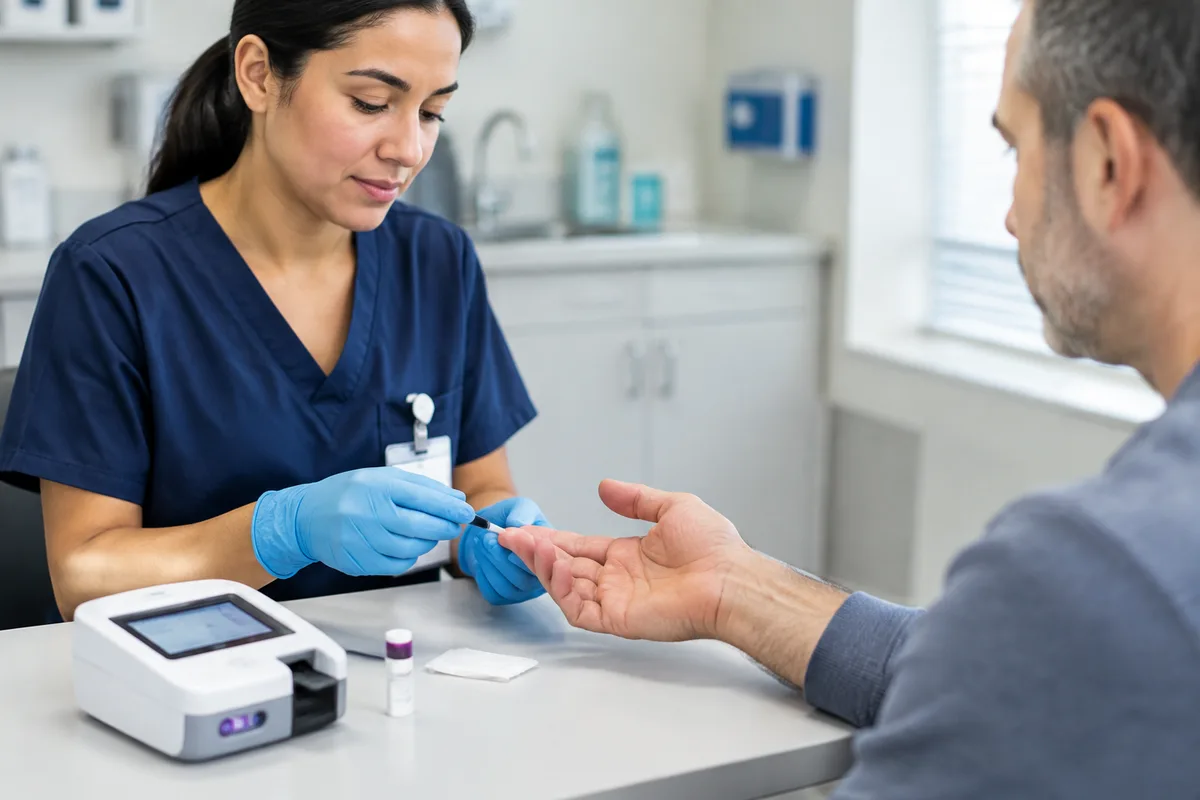
Point-of-Care HbA1c Testing
Point-of-care HbA1c testing is an in-office diabetes check that shows average blood sugar over recent months, giving both patient and clinician a clear picture of blood sugar control without a separate lab visit. At Quentin Medical Pc, this test is part of our broader approach to chronic disease management and diabetes care for patients in Brooklyn, NY.
What point-of-Care HbA1c Testing is
HbA1c measures the percentage of hemoglobin in the blood that has glucose attached to it. Because red blood cells live for about three months, this single number reflects average blood sugar levels over that stretch of time rather than a single moment, unlike a standard finger-stick glucose check that only shows a reading at that instant.
Point-of-care testing means the sample is analyzed right in the office using a small, dedicated device, rather than being sent out to an external laboratory. This approach was developed to shorten the gap between testing and results, replacing the older pattern of drawing blood, waiting days for a report, and then scheduling a follow-up visit to go over the numbers.
The test itself typically requires only a small finger-stick blood sample, similar to a routine glucose check, rather than a full blood draw from the arm.
How we use it at Quentin Medical Pc
As part of our on-site diabetes care and chronic disease management services, this in-office check lets us look at longer-term blood sugar trends during a regular visit. It works alongside other on-site tools we use to build a fuller picture of metabolic health, including automated blood pressure monitoring, digital scale and body composition tracking, and urinalysis, which together help assess how diabetes may be affecting the body over time.
When a more detailed lab panel is also needed, our in-office blood draw service allows samples to be collected here and sent out, so patients are not required to make a separate trip for routine lab work. Results and trends are kept in each patient's electronic health record, so your care team can compare current readings with past visits, and you can review your results afterward through the patient portal.
What it means for you
For patients managing or being screened for diabetes, point-of-care HbA1c testing can mean fewer separate appointments, since testing and discussion of results can often happen in the same visit. Because the sample is a simple finger stick rather than a full blood draw, the experience is generally quick and involves minimal discomfort.
Having timely information also supports clearer conversations with your provider about diet, activity, and medication, since decisions can be discussed with current numbers in hand rather than waiting on outside lab turnaround. This can be particularly useful for people juggling busy schedules or multiple health concerns, where reducing the number of separate visits and lab trips makes ongoing care easier to keep up with.
What to expect during your visit
No special preparation is usually required for this test; unlike some lab-based blood work, fasting is generally not necessary for HbA1c testing since it reflects average blood sugar rather than a single-moment reading. During the visit, a small sample of blood is taken from a finger stick and placed into the testing device.
The device processes the sample and typically produces a result within a matter of minutes, allowing your provider to review it with you before your visit ends. Your provider can then discuss what the number means for your individual situation, whether that involves ongoing monitoring, adjustments to a treatment plan, or coordination with other services such as weight management or medication management. The reading, along with notes from the discussion, becomes part of your electronic health record for future reference.
Frequently asked questions
Is the test safe?
Yes. It uses a small finger-stick blood sample, the same basic method used for routine glucose checks, and carries the same minimal risks associated with any finger-stick test, such as brief, mild discomfort at the puncture site.
Does the test hurt?
Most patients describe the finger stick as a brief pinch rather than significant pain. No needles beyond the small lancet used for the finger stick are involved, and there is no incision or extended procedure.
How long does it take and how often is it done?
The finger-stick sample and in-office analysis typically take only a few minutes as part of a regular visit. How often the test is repeated depends on individual health needs and is best discussed with your provider, since it varies from person to person based on overall diabetes management goals.
Who is this test appropriate for?
Point-of-care HbA1c testing is commonly used for adults being monitored for diabetes or prediabetes, as well as those undergoing general health screening as part of preventive care. Your provider can help determine whether this test fits your particular health picture during a visit.
If you would like to learn more about point-of-care HbA1c testing or discuss whether it is right for you, please get in touch with Quentin Medical Pc to schedule a visit.
This content is for general information only and isn't medical advice. Talk with your doctor about your own situation. If you have a medical emergency, call 911.