In-Office Blood Draw
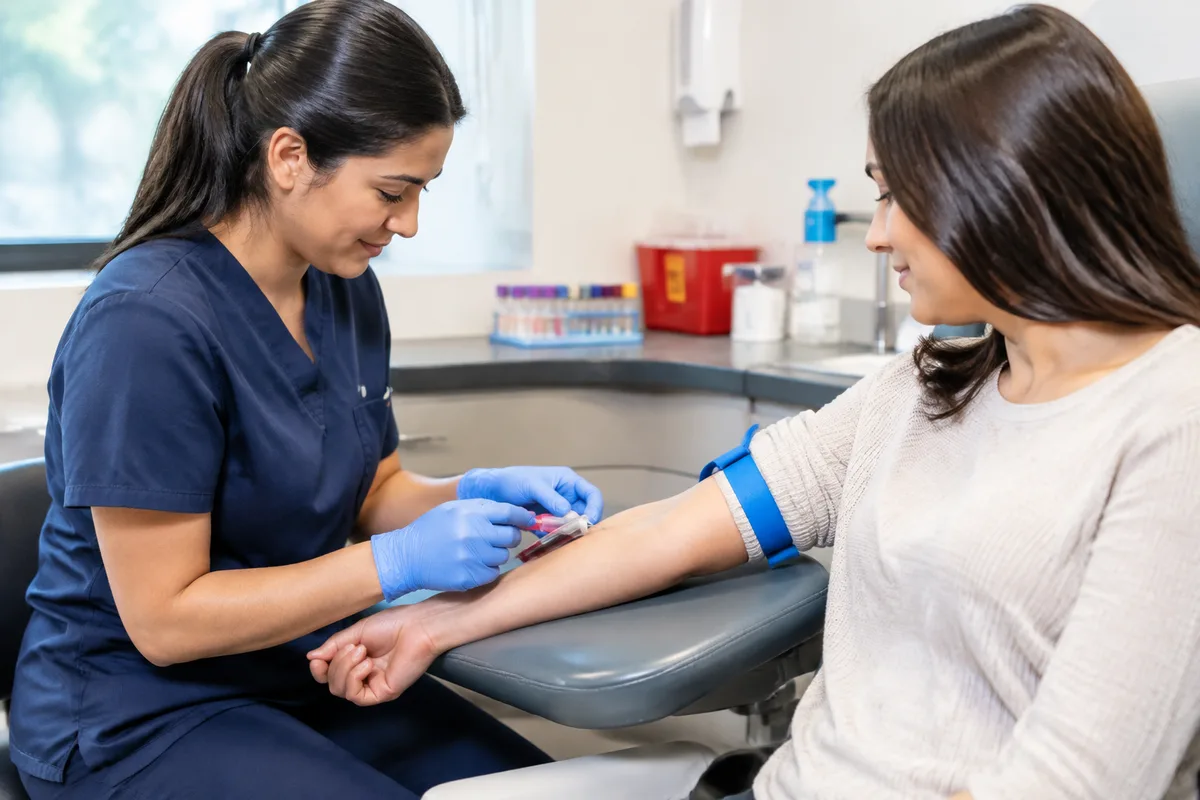
In-Office Blood Draw
When your care plan calls for lab testing, having the sample collected right in the office can make the whole process simpler. At Quentin Medical Pc, blood is drawn on site and sent out to the lab, so you don't need to schedule a separate stop before or after your visit.
What in-Office Blood Draw is
An in-office blood draw is exactly what it sounds like: a trained staff member collects a small blood sample using a needle and vial, right in the exam room or a dedicated draw area, rather than sending you to an outside collection site. The sample is then labeled, packaged, and sent to a laboratory for analysis.
This approach has largely replaced the older pattern of writing a lab order and asking patients to find their own draw station on a separate day. By keeping collection in-house, the practice can coordinate timing with your visit, your fasting status, and any other tests your clinician wants run at the same time.
How we use it at Quentin Medical Pc
At Quentin Medical Pc, blood samples are collected here and sent to the lab, so there is no separate trip required. This is often paired with other on-site checks done during the same visit, such as urinalysis or point-of-care HbA1c testing, so your clinician can look at multiple pieces of information together rather than waiting on several separate appointments.
Results are organized within the practice's electronic health record, so your history, medications, and prior results stay connected in one place. Once results come back, they are typically made available through the patient portal, giving you secure online access to your results and any messages from the office about next steps.
This setup is commonly used to support ongoing needs like chronic disease management, diabetes care, cholesterol management, and thyroid care, as well as general lab work ordered as part of preventive visits or physicals.
What it means for you
Having blood drawn in the same location as your appointment can save time and reduce the number of places you need to visit for routine care. It also allows your clinician to time the draw appropriately, for example first thing in the morning for a fasting test, without asking you to coordinate a separate outside appointment.
Because collection happens in a familiar setting, some patients find it more comfortable than visiting an unfamiliar lab. Clear communication is also easier: any questions about why a test is being ordered, or what a result might mean, can be addressed directly with your care team rather than through a separate lab facility.
- Fewer stops — testing happens as part of the same visit instead of a separate trip.
- Coordinated timing — draws can be scheduled around fasting or medication needs.
- Connected records — results flow into your chart and portal alongside your history.
What to expect during your visit
Before the draw, your clinician will let you know which tests are needed and whether any preparation, such as fasting, is required. If your test does require fasting, you'll typically be told in advance so you can plan the visit accordingly.
During the draw itself, a staff member will clean the area, apply a tourniquet if needed, and collect the sample using a small needle and vial. Most draws take only a few minutes. You may feel a brief pinch or pressure, but the process is generally quick and well tolerated.
Afterward, a bandage is applied and you're free to continue your day. The sample is sent out to the lab, and results are typically shared with you through the patient portal or by a follow-up message from the office once they're ready.
Is an in-office blood draw safe?
Yes. Blood draws are a routine part of medical care and use sterile, single-use equipment for each patient. Any minor discomfort or bruising at the site typically resolves on its own within a day or two.
Does it hurt?
Most people feel a brief pinch when the needle is inserted, followed by mild pressure while the sample is collected. Any discomfort is usually short-lived, and staff can talk you through the process if you're feeling anxious about needles.
How long does the draw take?
The actual collection usually takes just a few minutes. The full visit may take a bit longer depending on how many tests are being ordered and whether other checks, like urinalysis or an EKG, are done at the same time.
Who is this suitable for?
In-office blood draws are appropriate for most patients, from routine preventive screening to ongoing monitoring of conditions like diabetes or thyroid concerns. Your clinician will let you know if any special preparation is needed based on the specific tests being ordered.
If you have lab work coming up or questions about what an in-office blood draw involves, reach out to Quentin Medical Pc and our team will be glad to help.
This content is for general information only and isn't medical advice. Talk with your doctor about your own situation. If you have a medical emergency, call 911.